



In today’s fast-paced digital advertising world, programmatic technology has revolutionized how brands connect with their audiences. Two essential tools driving this transformation are demand-side platforms (DSPs) and supply-side platforms (SSPs). While these platforms work together to automate the buying and selling of digital ad space, they serve very different roles. So, what are DSPs vs. SSPs?
Understanding the difference between DSPs and SSPs and how they work together can help you make smarter decisions and optimize your campaigns more effectively.
What Is a DSP (Demand-Side Platform)?
A DSP is a platform connected to third-party digital ad tech. It allows for real-time bidding for ad space across multiple publisher sites through a single interface. DSPs automate the media buying process using real-time bidding (RTB), making it easier to target the right audience at the right time.
Benefits of Using a Reputable DSP
Using a high-quality DSP gives advertisers access to:
- Multichannel inventory: Display, video, streaming audio, OTT and CTV
- Advanced targeting: Demographics, interests, location, device type and more
- Brand safety: Built-in tools to avoid unsafe or low-quality placements
- Real-time analytics: Transparent reporting and performance metrics
- Premium ad placements – Access to high-quality inventory and private marketplaces
Popular DSPs include:
- The Trade Desk
- Google Display & Video 360
- MediaMath
Why it matters: The right DSP can dramatically impact campaign performance, efficiency and brand reputation.
What Is an SSP (Supply-Side Platform)?
An SSP is a tool that publishers such as website owners, app developers or CTV channels use to manage, sell and optimize their available ad space. SSPs make inventory available to multiple DSPs, helping publishers increase revenue by connecting with more potential buyers.
Popular SSPs include:
- Magnite
- PubMatic
- OpenX
SSPs give publishers control over:
- Inventory pricing
- Which advertisers can access their ad space
- What types of ads are shown
Why it matters: Advertisers benefit when working with publishers who use reputable SSPs ensuring ad placements in brand-safe, high-quality environments.
DSP vs. SSP: Key Differences
|
Feature |
DSP (Demand-Side Platform) |
SSP (Supply-Side Platform) |
|
User |
Advertisers and agencies |
Publishers and media owners |
|
Goal |
Buy ad space efficiently |
Sell ad space for maximum revenue |
|
Function |
Bids on inventory |
Offers inventory to DSPs |
|
Control |
Campaign targeting, bidding, and budgets |
Ad placement, pricing and access control |
How DSPs and SSPs Work Together in Programmatic Advertising
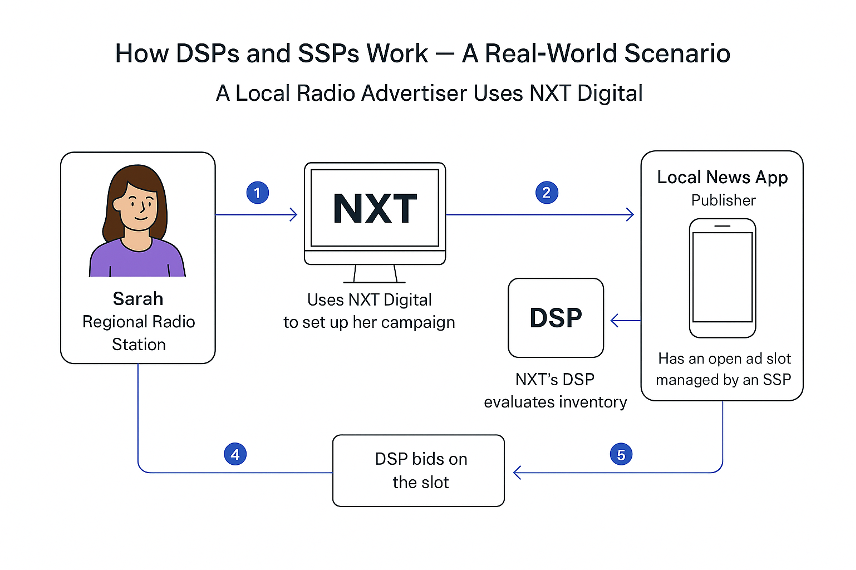
Here’s how a programmatic ad transaction typically works:
- A user visits a website or app.
- The publisher’s SSP offers the available ad slot to multiple DSPs.
- The DSPs evaluate the opportunity based on audience targeting, bid price and other criteria.
- The highest bidder wins, and the ad is instantly served—all within milliseconds.
This seamless exchange allows advertisers to reach the right audience efficiently, while publishers maximize the value of their inventory.
Explaining DSP vs. SSP to Advertisers without the Jargon
Think of it like this:
- The DSP is a digital shopping cart helping advertisers find and buy the best ad space.
- The SSP is the digital shelf helping publishers make their ad space visible and appealing to buyers.
Both are essential to the transaction. Without DSPs, advertisers couldn’t scale their campaigns. Without SSPs, publishers couldn’t monetize their content efficiently.
Evaluate Your Programmatic Partners
Understanding the distinct roles of DSPs and SSPs is key to navigating the programmatic landscape. If you’re not sure whether your current platforms are delivering the best results, it may be time to evaluate.
Ask yourself:
- Are my DSP and SSP partners offering strong targeting, brand safety and premium inventory?
- Do they align with my broader advertising strategy?
Subscribe to Aspire for more programmatic insights, strategies and digital advertising trends delivered straight to your inbox.


